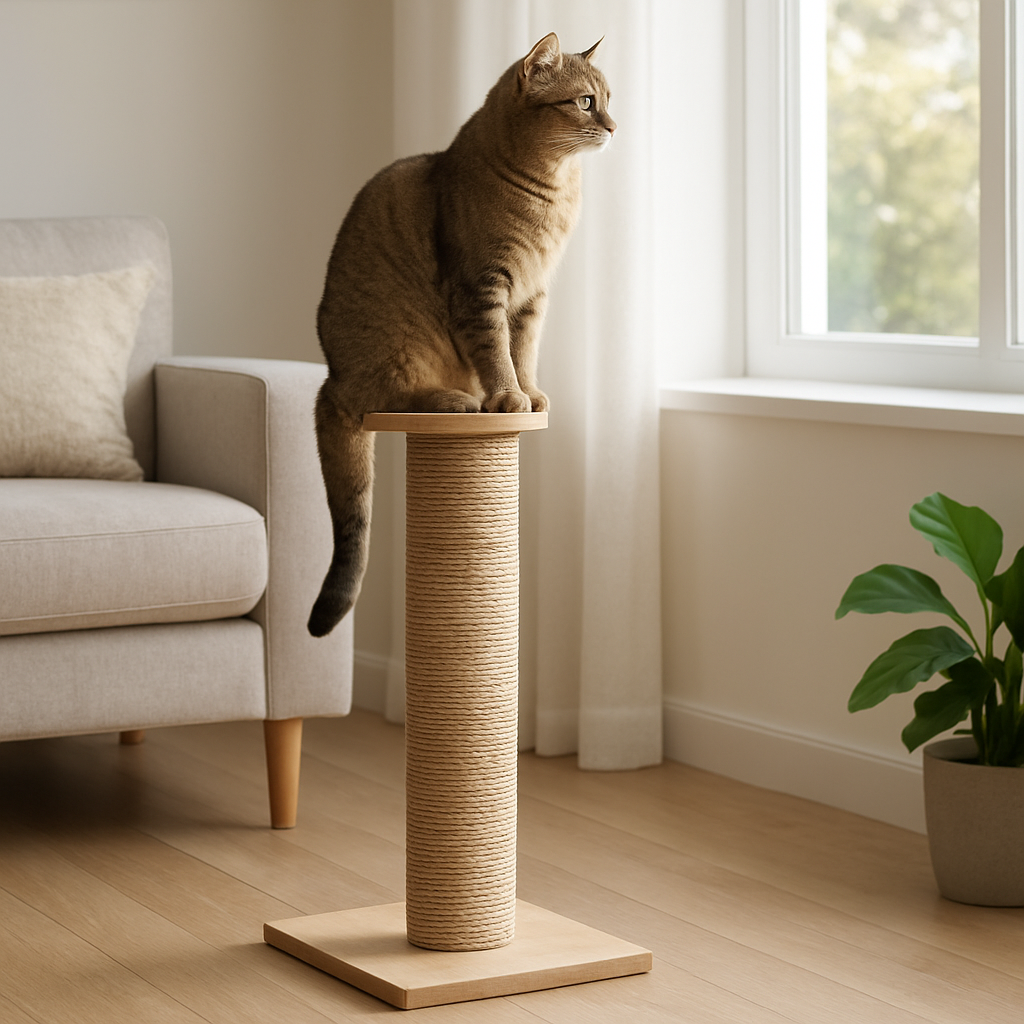
You know that moment when you walk into the living room and find your favourite curtain shredded, a tiny clawed masterpiece hanging from the fabric? It’s the universal cat‑owner nightmare that makes you wonder if you’ve accidentally adopted a tiny demolition crew. That’s why we’re talking about the cat scratching post tall that can save your home and keep your feline happy.
Most cats instinctively reach for something vertical – it mimics the bark of a tree where they’d naturally stretch, claw, and mark territory. A short, flimsy post might feel more like a cheap toy than a proper substitute, and you’ll see the same old furniture casualties reappear. When the post stands tall enough – think 30‑inch or more – it satisfies that upward‑pulling urge and gives their muscles a real workout.
In our experience at Kaotik kollectionz, we’ve seen pet parents swap out a battered sofa leg for a sturdy cat scratching post tall and notice the difference within a week. The cat starts using the post for both play and relaxation, and the household sighs with relief. It’s not just about height; the right material – sisal rope, carpet, or natural wood – adds texture that cats love to dig into.
So, how do you pick the perfect one? First, measure the space where you plan to place it. You’ll want enough clearance around the base so the cat can circle, lean, and tumble without bumping into furniture. Second, check the stability – a weighted base or wall‑mount option prevents wobbling, which can deter even the most enthusiastic scratcher.
Think about your cat’s personality, too. A high‑energy kitten will appreciate a post that can double as a climbing tower, while an older cat might prefer a smoother, less aggressive surface. Adding a few toys or a perch near the top can turn the post into a mini‑observatory, encouraging your cat to stay up there longer.
Ready to give your cat a place they can truly call their own? A well‑chosen cat scratching post tall not only protects your décor but also supports your cat’s natural instincts, keeping claws healthy and stress levels low. Let’s dive in and explore the key features you should look for, plus tips on placement and maintenance, so you and your whiskered companion can both breathe easier.
A cat scratching post tall gives your feline a safe, satisfying outlet for natural clawing while protecting your furniture and easing stress. Choose a sturdy, 30‑inch‑plus post with sisal or wood surface, stable base, and add a perch or toy to keep your cat engaged and happy throughout the day.
Ever notice how your cat will sprint to the highest shelf the moment you walk in the room? That instinct to go up is wired deep – it’s how wild cats mark territory, stretch muscles, and feel safe. A short, wobbling post just can’t satisfy that urge.
Here are the top reasons a cat scratching post tall makes a world of difference for you and your whiskered companion.
When the post reaches 30‑inches or more, your cat can really elongate from paws to tail. That vertical stretch fires up the spine, shoulders, and hind‑leg muscles, keeping them limber. It’s like a yoga session for felines – you’ll see them arching, reaching, and looking downright relaxed afterwards.
Longer posts let cats engage different angles of their claws. The top portion is perfect for a quick rake, while the lower section lets them dig in harder. Over time this reduces over‑grown nails and the need for frequent trims.
Does your cat ever come to you with a sore paw? A tall post gives them a safe outlet, so they’re less likely to over‑scratch furniture and end up with sore pads.
Climbing and scratching release endorphins. A tall post becomes a personal perch where they can observe the room, feel secure, and calm down after a hectic play session. In our experience, cat parents notice fewer sudden bursts of aggression once a proper tower is in place.
Think about those moments when your cat curls up on a windowsill, eyes half‑closed. A tall post with a perch can replicate that vibe, especially on rainy days when outdoor views are limited.
Let’s be honest – you’ve probably found a shredded curtain or a shredded couch leg. By offering a tall, sturdy alternative, you redirect that energy away from your beloved décor. The post absorbs the claw‑energy, protecting sofas, drapes, and even wooden floors.
And if you ever wonder why some cats ignore a short post, it’s because their instincts tell them “that’s not a real tree.” Height matters.
When you add a hanging toy or a cozy blanket to the top, the post becomes a mini‑playground. Kittens love to chase toys up and down, while senior cats appreciate a soft spot to nap after a quick stretch.
So, does a tall post double as a cat‑friendly lounge? Absolutely – just add a plush cushion and you’ve got a feline penthouse.
Ready to see one in action? Check out this quick demo:
Notice how the cat effortlessly climbs, scratches, and then perches at the very top? That’s the sweet spot we aim for with every tall post we recommend.
While you’re considering the perfect model, think about stability. A heavy base or wall‑mount keeps wobble to a minimum – cats can’t afford a shaky tower when they’re focusing on a perfect stretch.
And here’s a little tip: if you have limited floor space, a tall post with a narrow footprint still delivers the same benefits. Height, not bulk, does the heavy lifting.
Picture this: you’re sipping coffee, your cat is perched high, watching the world, and you both enjoy a quiet moment. That’s the everyday win a tall scratching post brings.
Whether you’re a new cat parent or a seasoned cat‑whisperer, upgrading to a cat scratching post tall is a small change with big returns – healthier claws, calmer vibes, and a happier home.
Need help picking the right size or material? Our team at Kaotik kollectionz is happy to guide you through the options – just drop us a line.
Remember, a taller post isn’t just a piece of furniture; it’s an investment in your cat’s wellbeing and your peace of mind.
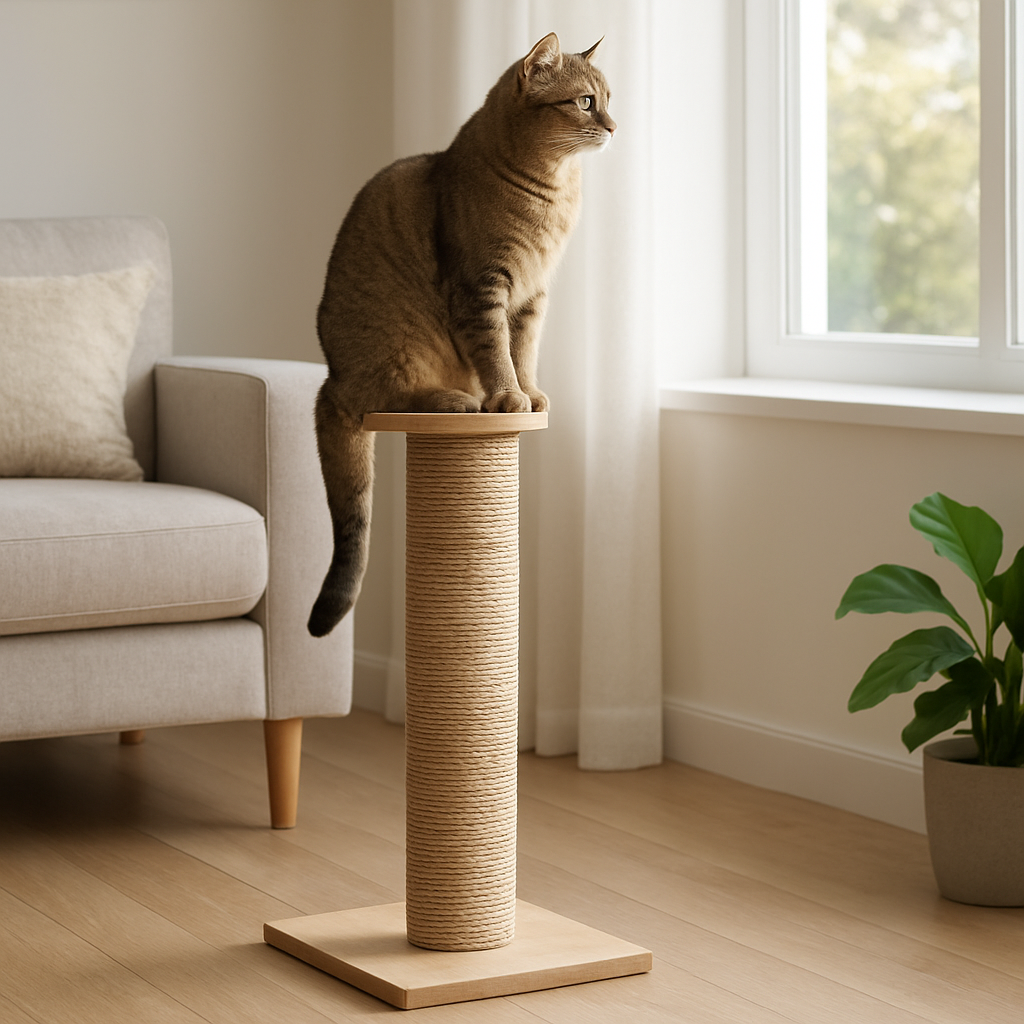
When you’re hunting for the perfect surface for a cat scratching post tall enough to let your whiskered friend stretch fully, the material matters almost as much as the height. The right texture satisfies that primal urge to rake, dig and mark, while the wrong one sends them back to your sofa. Below are the go‑to options we’ve seen work best for cat lovers who want a happy, claw‑healthy home.
Sisal is rough, durable and gives cats a satisfying resistance when they pull their claws upward. It’s the texture most felines instinctively seek, and it lets them shed the outer nail sheath without getting tangled in loops. As the cat‑behavior experts at Cat Behavior Associates explain, a rough surface is essential – carpet can feel soft but it often traps nails, sending your cat back to the furniture.
We like to wrap sisal tightly around a sturdy pole, then add a few extra loops near the top so the cat can grab and scratch at different angles. If your cat is a heavy‑weight rumbler, choose a thicker rope (about 1‑inch diameter) so it won’t fray after a few months.
Some cats go bonkers for raw wood or real tree bark. The grain gives just enough give for the claws to dig in, and the scent of natural fibers can be oddly soothing. A solid wooden pole finished with a strip of bark mimics the outdoors while staying indoor‑friendly.
Tip: Pick untreated wood (like pine or birch) and avoid pressure‑treated lumber, which can release chemicals. A thin bark veneer can be glued on, or you can simply leave a small log segment attached to the base for a rustic look.
If your cat prefers a more horizontal, “scratch‑and‑slide” motion, corrugated cardboard is surprisingly effective. The fluted layers create a gritty surface that lets cats file their claws while also giving a bit of give that prevents splintering.
Because cardboard isn’t as durable as sisal, rotate the panels every few weeks. Many cat‑parent communities swear by stacking a few sheets on a tall pole – it looks like a makeshift tree and adds visual interest.
Low‑pile carpet is sometimes used because it’s easy to source and feels plush. However, as the same experts note, carpet loops can snag claws, turning the post into a frustration zone. If you must use carpet, opt for a tightly‑woven, low‑pile fabric and test it with a nail file first – if the claws slide easily, you’re good to go.
Many of our customers love a two‑tone pole: sisal rope for the lower stretch zone, then a short wooden or bark section near the top for a perch. This gives the cat a place to rest after a vigorous session and keeps the scratching surface fresh.
Another trick is to attach a thin carpet strip just below the perch. The cat can transition from a rough scratch to a softer pad before settling to look out the window.
For the environmentally conscious pet parent, recycled sisal, reclaimed wood or even hemp rope are emerging options. They perform similarly to their virgin counterparts and let you brag about a greener cat‑corner.
When you pick a recycled material, double‑check that the fibers are still abrasive enough – a quick test with your own fingernail will tell you if the surface feels “grabby.”
Bottom line: the material you choose should feel rough enough to let your cat file its nails, sturdy enough to stay put, and safe enough to avoid splinters or loose threads. Pair the right texture with a stable, tall base, and you’ve got a cat scratching post tall that’ll keep both your feline and your furniture happy.
Ever watched your cat stare up at a bookshelf and wonder why the world seems so out of reach? That feeling tells you the post you’re eyeing might be too short. The right height turns a simple scratching post into a personal tree‑house, a stretch zone, and a stress‑buster all in one.
Start with the obvious: how tall is your cat when fully stretched? Take a tape measure, gently coax your feline to lie flat, and note the length from nose to tip of the tail. Add a few extra inches – that extra space lets the cat reach the top without feeling cramped. For most domestic cats, 30‑35 inches (about 75‑90 cm) hits the sweet spot, but larger breeds like Maine Coons might need 45 inches or more.
Pro tip: if you have a kitten, aim for a post that will grow with them. A modular design with interchangeable sections lets you add height later, saving you from buying a whole new tower.
Even the tallest post is useless if it wobbles. A heavy, wide base (think at least 12 inches across) or a weighted sand‑filled platform keeps the post planted. If you’re short on floor space, a wall‑mount bracket is a solid alternative – just make sure the wall studs can handle the load.
Here’s a quick test: give the post a gentle push. If it rocks more than an inch, add weight or swap the base. A stable post encourages confidence; a shaky one scares cats away.
Most cats love a perch at the very top. It becomes their lookout, a place to nap, or a launchpad for a playful pounce. When you choose height, also consider the surrounding room. You’ll want the cat to be able to jump onto the post from a nearby piece of furniture without a dangerous leap.
Imagine your living room layout: a couch three feet away, a window sill two feet high. Position the post so the cat can sprint, scratch, then hop onto the perch and gaze outside. That flow feels natural and keeps the cat engaged.
Mixing textures works wonders. Use sisal rope for the lower half – it gives that satisfying “grab‑and‑scrape” feel. Near the top, a wooden or bark sleeve offers a softer, more natural surface for lounging. This combo mimics a real tree: rough bark for climbing, smoother branches for resting.
If you’re eco‑conscious, reclaimed wood or recycled sisal does the trick without sacrificing durability. Just run your fingernail over the material; it should feel “grabby,” not silky.
Before you finalize the purchase, picture everyday life. Will the post fit in a corner next to the window? Does the base interfere with a coffee table? Sketch a quick floor plan or use a piece of masking tape on the floor to mark the footprint. This visual cue helps avoid a post that blocks traffic flow.
Another scenario: multi‑cat households. If two cats share the space, give each a separate vertical zone or a wider base so they can both use the post without crowding. A double‑layer perch (one slightly lower than the other) often does the trick.
Once you’ve nailed the height, sprinkle a bit of catnip on the sisal or dangle a feather toy near the top. The scent and movement cue the cat that this is the new favourite spot. Reward early use with a treat – you’ll see the habit stick fast.
And if your cat seems hesitant, remember the calm environment helps. A few drops of a soothing spray, like the best cat calming spray, can reduce anxiety and make the new post feel safe.
When you tick all these boxes, you’ve got a cat scratching post tall that feels like a natural tree, a workout station, and a cozy perch all in one. Your feline will thank you with endless stretches, happy purrs, and a dramatically reduced desire to shred your curtains.
Okay, you’ve measured, you’ve checked the stability checklist, and now you’re scrolling through endless options wondering if you’ll ever find a tall post that won’t break the bank. The good news? There are solid choices under $50 that still give your cat the stretch they crave without turning your wallet upside‑down.
This no‑frills pole is a 36‑inch sisal‑wrapped stick on a 12‑inch sand‑filled base. The base is wide enough to keep it steady, and the sisal stays grippy for months. We’ve seen cat lovers love the minimal design because it blends into any décor – think Scandinavian living rooms or cosy cottage corners.
Tip: Sprinkle a pinch of dried catnip on the rope after a week; it revs up interest without adding extra cost.
Got a box of corrugated cardboard lying around? This kit bundles pre‑cut panels, a 30‑inch wooden dowel, and easy‑to‑follow instructions. Assemble, tape, and you’ve got a hybrid tower that looks like a mini tree. The cardboard offers a surprisingly satisfying scratch, while the dowel gives the height you need.
Because you’re building it yourself, you can swap out panels when they wear out – total cost stays under $25 forever.
For the cat that prefers a more “natural” feel, this post combines a bamboo core with a thin bark sleeve at the top. The bark acts as a perch, and the bamboo core gives a sturdy, lightweight feel. It’s also eco‑friendly, so you’re doing a tiny favour to the planet while keeping the price low.
We’ve heard from cat parents that the bark section becomes a favorite nap spot – it’s smoother than sisal but still gives that authentic tree vibe.
If wobble is your biggest fear, this option adds a 5‑pound concrete base that anchors the post solidly. The pole is 32 inches tall, wrapped in sisal, and the base can be tucked under a coffee table or placed in a corner. It’s a bit heavier, but the stability is worth the extra few dollars.
Pro tip: Slide a small blanket over the base for a cosy look that matches your sofa.
These modular posts let you add or remove sections in 6‑inch increments, so you can start at 30 inches and grow to 42 inches as your cat matures. The sections snap together with simple pins – no tools needed. It’s a bit pricier, but the flexibility means you won’t need to buy a whole new tower later.
We love this for multi‑cat homes; each cat can claim a different height level without fighting over space.
So, how do you decide which one fits your space and budget?
Whichever you pick, the key is to give your feline a tall, sturdy place to stretch, claw, and perch without emptying your savings.
Remember, a happy cat equals fewer shredded curtains, and that’s a win for both you and your décor.
Ready to shop? Just pick the style that matches your home vibe and your cat’s personality, and you’ll have a budget‑friendly cat scratching post tall that does the job beautifully.
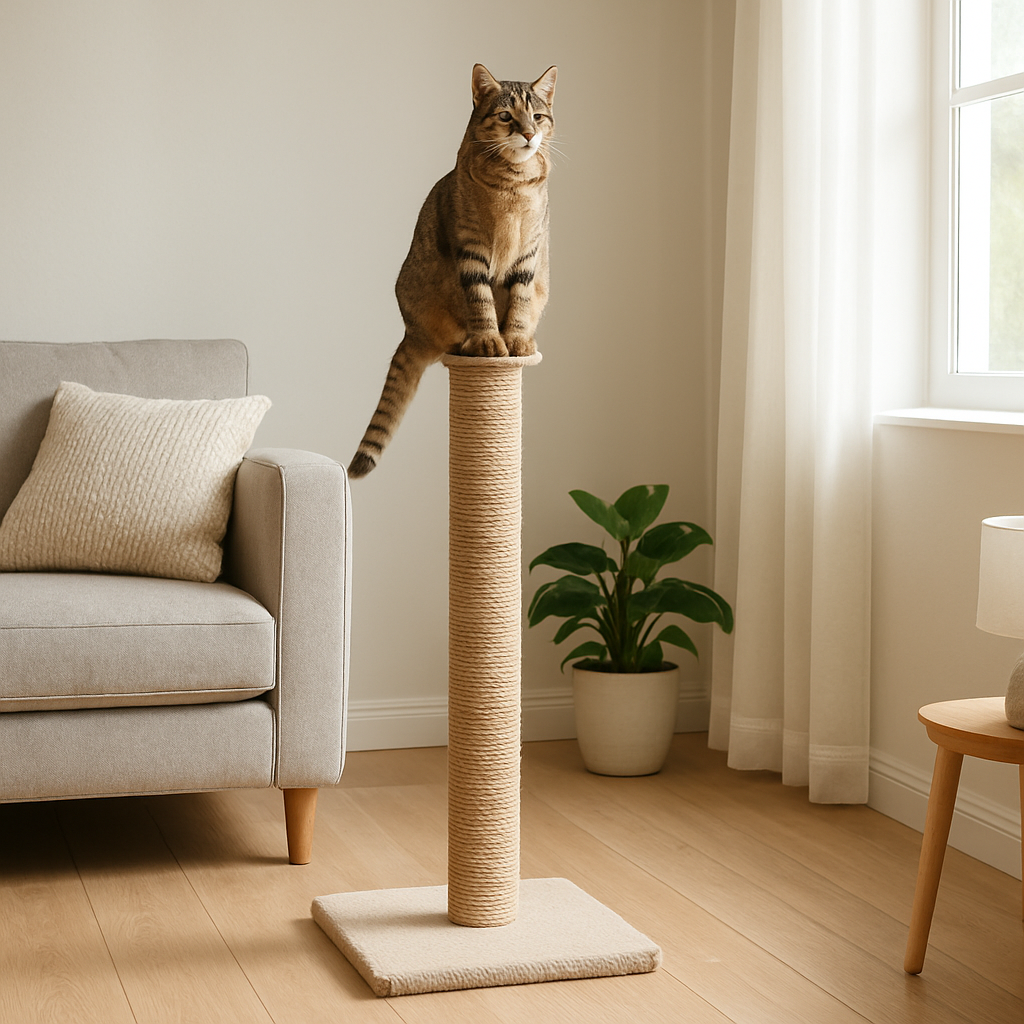
Let’s be real – you’ve tried the cheap‑o options and your cat still eyes the curtains like they’re a personal playground. When the budget‑friendly picks just aren’t cutting it, it’s time to think about a premium cat scratching post tall that does more than survive a few claw sessions.
Why go premium? Because a well‑built post saves you time, money, and a lot of stress. It stays steady, looks good in your living room, and keeps the feline‑focused on the right thing – not your drapes.
If you want something that feels like a piece of modern art and lasts a lifetime, the Calypso Everlasting Cat Scratcher is a solid choice. Wrapped in faux poly‑rattan, it’s claw‑proof and comes with a weighted base that keeps even the biggest tomcat from toppling over.
What we’ve seen work best: place it near a sunny window, sprinkle a bit of catnip, and give your cat a gentle demo. Within a night most cats start using it – the texture is just right, and the height (31″) hits the sweet spot for a full stretch.
For cat lovers who want the outdoors inside, look for a post that pairs a sturdy hardwood pole with a strip of real bark at the top. The wood gives the rigidity you need for a tall post, while the bark provides a softer perch that cats love to nap on.
Pro tip: a 36‑inch to 42‑inch height works for most breeds, but if you have a Maine Coon, aim for 45‑inches or more. The extra inches let a big cat reach the top without feeling cramped, and the natural scent of bark can actually calm an anxious feline.
Some premium posts double as a mini‑treehouse. Look for a design that includes a perch, dangling toys, and maybe a hidden storage nook for treats. The added features keep the cat engaged for longer stretches, which means fewer surprise attacks on your sofa.
When you choose a tower, check the base width – at least 12‑inches across – and make sure the joints are screwed, not just glued. A sturdy base prevents wobble, and a modular design lets you add height later as your cat grows.
So, how do you decide which premium option fits your home and your cat’s quirks? Below is a quick comparison to help you weigh the trade‑offs.
| Feature | Typical Price | Why It’s Worth It |
|---|---|---|
| Calypso Everlasting – faux rattan, weighted base | $125‑$130 | Claw‑proof, modern look, stays upright even with heavy cats |
| Solid wood + bark combo | $150‑$180 | Natural textures, durable pole, bark perch doubles as a nap spot |
| Multi‑function tower (perch, toys, storage) | $180‑$220 | All‑in‑one entertainment, adjustable height, stable wide base |
Remember, a premium post isn’t just a splurge – it’s an investment in your cat’s health and your home’s peace of mind. The right height and material keep claws sharp, muscles stretched, and anxiety low. If you’re a cat lover who’s tired of playing “find the next curtain” every week, it’s time to upgrade.
Here’s a quick checklist before you click “add to cart”:
Take the plunge, and you’ll likely see a dramatic drop in shredded fabrics, plus a calmer, more content cat perched proudly on its new throne.
Ready to roll up your sleeves and give your cat a perch that’ll last years? Below are seven hands‑on projects that use stuff you probably already have at home. No need to break the bank – just a bit of wood, rope, and a pinch of creativity.
Grab a non‑treated 4×4 (about 36″ tall) and a sheet of ¾” plywood for a sturdy base. Drill a few holes, glue the post to the base, and wrap natural sisal rope from tip to bottom. The trick? Tight, even wraps and a nail every two or three turns keep the rope from loosening. When the rope wears, you can replace it for just a few dollars.
Need a step‑by‑step guide? Check out this detailed DIY tutorial that walks you through every cut and glue point.
Old pallets make perfect, cheap frames. Sand them down, stack two or three for height, then slap a low‑pile carpet or rug on the base. Wrap the vertical slats with sisal rope or even a strip of burlap for texture. The carpet adds a comfy landing spot for the cat’s nap‑time after a good stretch.
And you get a rustic look that blends right into a farmhouse‑style living room – bonus points for sustainability.
If you love the cheap‑and‑cheerful vibe, cut a few 12‑inch‑wide cardboard tubes (think mailing tubes) to 36‑inch lengths, glue them together in a spiral, and secure with duct tape. Slip a sisal rope around the outside, and you’ve got a lightweight, replaceable tower. When the cardboard starts to fray, just pop a new tube in.
It’s the perfect project for renters who can’t drill into walls.
PVC pipe is surprisingly sturdy and easy to cut. Use a 2‑inch pipe, cap both ends, and mount it on a weighted sand base. Wrap the pipe with sisal rope or hemp for a natural feel. The pipe’s smooth interior lets you slide a perch board on top without extra hardware.
Tip: Drill a few holes in the base plate and add zip ties for extra stability.
Got an old, wobbly bookshelf? Remove the shelves, sand the frame, and attach a strip of real tree bark at the top. The bark acts as both a scratching surface and a perch. For the vertical portion, wrap sisal rope around the side studs. You end up with a multi‑level tree that looks like it belongs in a designer’s home.
It’s a win‑win: you recycle furniture and give your cat a natural‑looking climb.
Stability is king, especially for larger breeds. Pour a small concrete block (about 6‑inch diameter) and embed a metal eye bolt for hanging. Then attach a wooden dowel or PVC pipe and wrap it with sisal rope. The heavy base prevents wobble, and the rope can be swapped out when it starts to fray.
Just remember to let the concrete cure fully before the cat gets its paws on it.
For the ultimate customisable tower, mount a 12×12 pegboard to the wall, then add wooden dowels of varying heights into the holes. Wrap each dowel in rope or bark, and you’ve got a vertical playground that grows with your cat. When one section gets too short, simply swap in a longer dowel.
It’s perfect for multi‑cat households where each feline can claim its own height.
So, which of these ideas feels like a good fit for your space? Whichever you choose, the secret sauce is the same: a tall, stable core wrapped in a texture cats can’t resist. Pair it with a sprinkle of catnip, a few toys, and you’ll watch your furry friend claim the throne for years to come.
Most indoor cats feel satisfied with a post that’s at least 30‑35 inches (75‑90 cm) tall – that’s roughly the length of a full stretch from nose to tail tip plus a few extra inches. If you’ve got a larger breed, like a Maine Coon or a Ragdoll, aim for 45 inches or more so they can reach the top without feeling cramped. A quick trick is to coax your cat onto a piece of paper, measure the stretch, then add 2‑4 inches. That extra space gives them room to climb, perch and look out at the room.
Absolutely. A DIY post can be as sturdy as a store‑bought one if you focus on two things: a solid vertical pole and a heavy base. Grab a 4×4 wooden dowel (or a PVC pipe if you prefer a lighter feel), wrap it tightly with sisal rope, and set it on a sand‑filled bucket or a concrete block. The key is to keep the base wide enough – about 12 inches across – so the post won’t wobble when your cat launches into a stretch.
In our experience, natural sisal rope tops the list because it gives that satisfying “grab‑and‑scrape” feel cats instinctively seek. If your cat prefers something softer, a strip of real bark or untreated wood works well for the upper perch. Cardboard can be a budget‑friendly layer, but it wears out faster. The rule of thumb: rough enough to file the claw, durable enough to survive months of enthusiastic use.
Stability is king. First, choose a base that’s heavy or wide – a sand‑filled bucket, a concrete slab, or a wooden platform at least 12 inches square does the trick. Second, make sure the pole is firmly anchored with screws or a metal eye bolt rather than just glued. If floor space is tight, a wall‑mount bracket secured to studs works just as well, provided the bracket can handle the cat’s weight and the post’s height.
Watch the rope or bark for fraying, flattening or a loss of texture. Most sisal rope holds up for six to twelve months of daily use, but if you hear a squeak when your cat claws, that’s a sign it’s wearing thin. Cardboard panels may need swapping every few weeks, while a wooden or bark sleeve can last years if you sand away splinters. A simple rule: replace any surface that no longer offers a “grabby” feel.
Yes, a vertical outlet taps into a cat’s natural instinct to climb and mark territory, which can calm nervous behaviours. When the post is tall enough for a full stretch, it also doubles as a perch where the cat can survey the room – a built‑in stress‑reliever. Pair the post with a dab of catnip or a calming spray, and you’ll notice fewer frantic dashes to the curtains and more relaxed, contented lounging.
We’ve walked through everything a cat lover needs to know about picking, building, and maintaining a cat scratching post tall enough to satisfy those stretch‑and‑claw instincts.
If you’re still wondering whether the extra inches matter, think about the last time your feline claimed the curtains – a tall post gives them a safe perch, a workout, and a calming lookout all in one.
Key takeaways: measure your cat’s full stretch and add a few inches; choose a rough, durable surface like sisal or bark; secure a wide, weighted base or wall‑mount; refresh the covering when it loses that ‘grabby’ feel.
In our experience at Kaotik kollectionz, the simplest upgrades – a pinch of catnip on the rope or a soft blanket on the base – often turn a hesitant cat into a happy climber within a day.
So, what’s the next step? Grab a pole that meets the height guide, wrap it with a texture your cat loves, and place it where they can sprint to it from a favourite chair. Watch them stretch, perch, and finally leave your sofa alone.
Remember, a well‑chosen cat scratching post tall isn’t a luxury; it’s a small investment that pays off in fewer shredded fabrics, calmer evenings, and a healthier cat. Happy scratching!







Leave a comment