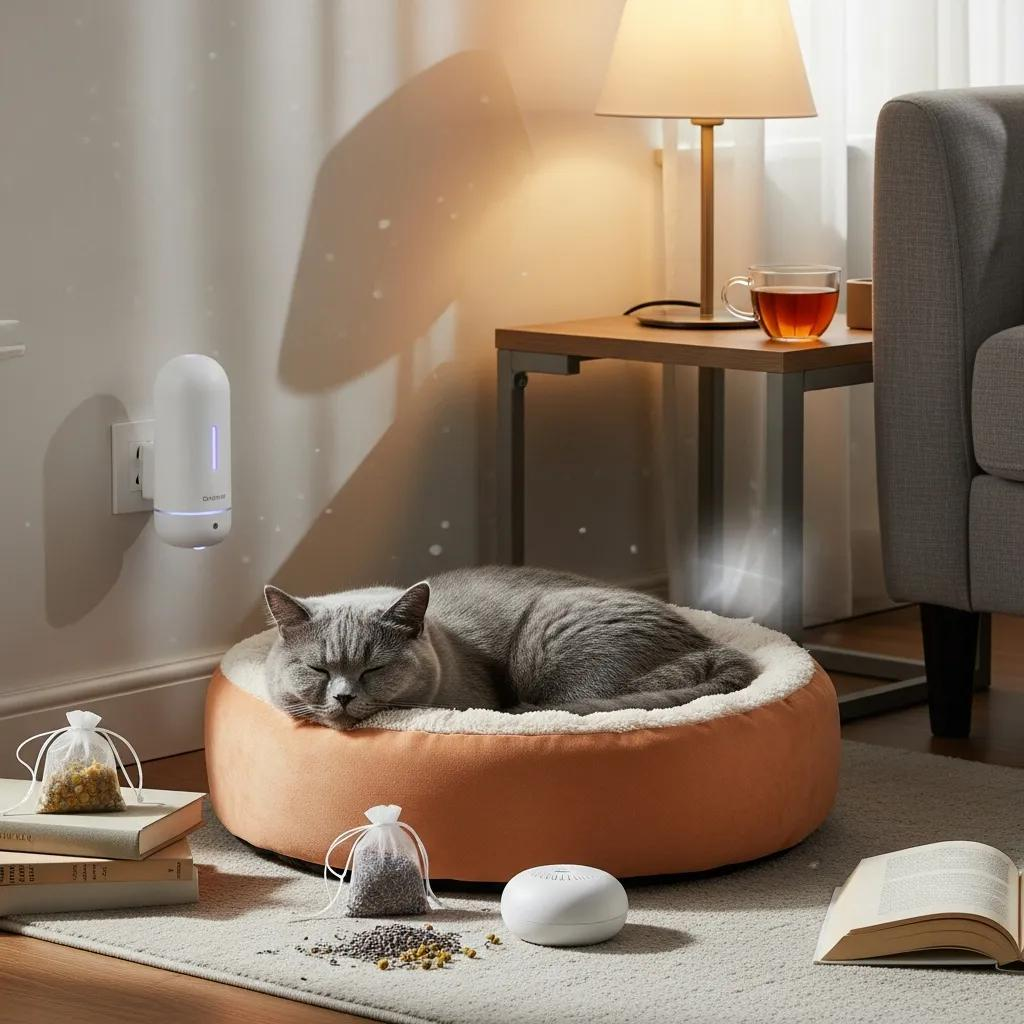
Helping your cat feel calm at home doesn’t have to be complicated. This guide walks you through simple, effective calming products and practical steps to ease feline stress. We’ll cover what triggers anxiety in cats, how to spot the signs, the products that reliably help, holistic tips for daily peace, and how to pick what’s right for your cat. Read on to build a gentler, more relaxed routine your Kozy Kat will thank you for.
Cats get anxious for lots of reasons: a move, new household members, loud noises, health issues, or old trauma. The key is watching behavior and body language. Common signs include over-grooming, pacing, hiding, changes in how they meow or eat, litter-box accidents, and physical cues like teeth grinding or faster breathing. Tracking your cat’s behavior over time helps identify patterns and what sets them off.
Typical stressors include:
These triggers often show up as hiding, over-grooming, appetite changes, or louder/strange vocalizing.
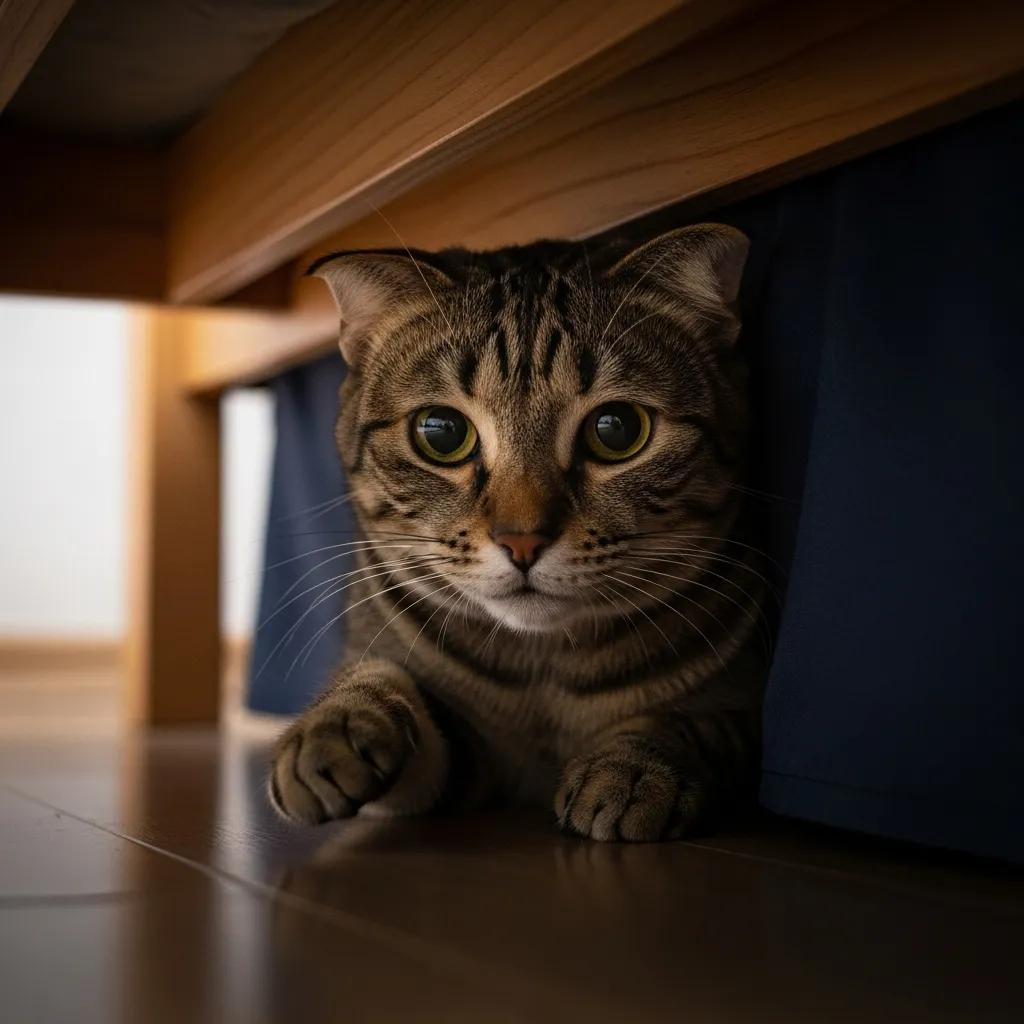
Look for these telltale signs:
Journaling behaviors and any environmental changes makes it easier to pinpoint what unsettles your cat.
Several well-chosen products can make a real difference when paired with routine and patience:
| Product Type | Benefit | Usage |
|---|---|---|
| Calming Herbs | Natural relaxation | Offer in toys or as occasional treats |
| Aromatherapy | Soothes the space | Use vetted, lightly diluted sprays or diffusers |
| Pheromone Diffusers | Signals safety | Plug in near favorite resting spots |
| White-Noise Machines | Masks disruptive sounds | Place in living or sleeping areas |
| Classical Music | Encourages calm | Play softly during stressful times |
Herbs and pheromone diffusers are often the easiest, lowest-risk starting points for improving your cat’s comfort at home.
Pheromone diffusers and sprays mimic the feline facial pheromone cats leave when they feel safe. These synthetic cues can lower stress without medication by making the environment feel familiar and secure.
Research has examined how synthetic feline facial pheromones influence cat behavior and intake.
Synthetic Feline Facial Pheromones & Cat Behavior Basic data are needed to evaluate how a synthetic feline facial pheromone (FFP) affects behavior and food intake in healthy versus clinically ill cats. Effects of a synthetic facial pheromone on behavior of cats, CAT Buffington, 2000
Natural calming treats and supplements can be a low-risk way to ease stress. Benefits include:
Used sensibly, these natural options can help your cat settle without adding stress or side effects.
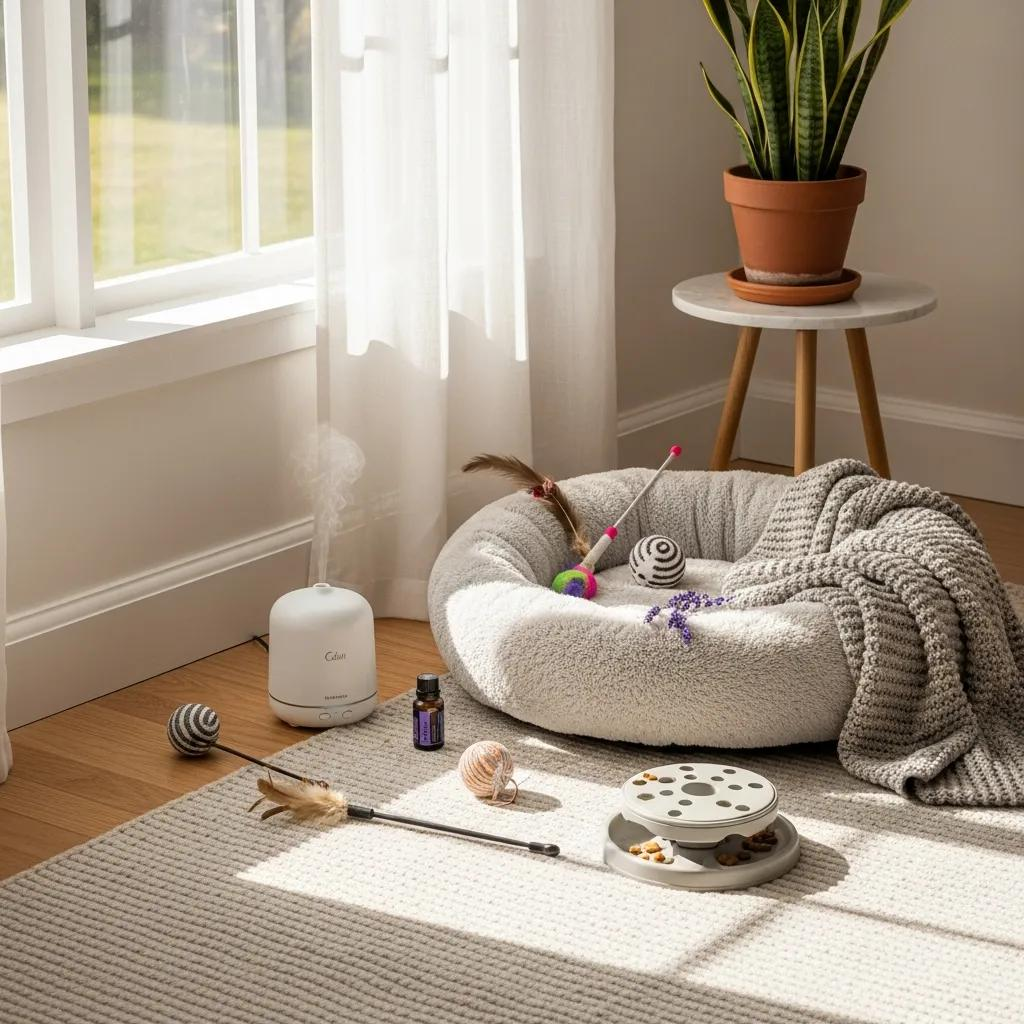
Anxiety vests apply gentle, consistent pressure that many cats find reassuring — similar to a soothing embrace. They’re useful for short-term events like storms, trips to the vet, or car travel and can lower observable signs of stress when used correctly.
Holistic approaches work best when combined with products. Key tactics include:
Layering these small changes builds a steadier, calmer home for your cat.
Try these practical changes:
These small environmental shifts can make a big difference in how safe and content your cat feels.
Routine gives cats a sense of control. When meals, playtime, and rest happen on a steady schedule, cats spend less time worrying about what’s next and more time relaxing. Predictability is one of the simplest tools to lower daily stress.
Pick the best calming aids by following these steps:
With observation and patience, you’ll find a tailored calming plan that fits your cat’s needs.
Choose solutions based on:
Thoughtful selection and close observation will lead to the best outcomes for your cat.
Combine products thoughtfully: start small, introduce one new item at a time, and watch how your cat reacts. For example, use a pheromone diffuser alongside calming treats and a Calm Corner setup. Rotate herbs like catnip, valerian, and chamomile rather than piling them on, and add gentle background noise when needed. Keep notes so you can fine‑tune the mix that works best for your cat.
Look for quieter, calmer behavior: less hiding, reduced vocalizing, steadier eating, and normal grooming. If your cat resumes play or shows relaxed body language (soft eyes, slow blinking, relaxed posture), that’s a good sign. Track changes in a journal to see gradual improvements.
Most calming products are safe when used as directed, but individual sensitivities occur. Some herbs or ingredients may cause reactions, and many essential oils are toxic to cats — avoid them or use only veterinarian-approved options. Check with your vet before trying new supplements, especially if your cat has medical conditions or takes medication.
Timing varies: calming treats can feel the effects quickly, while pheromone diffusers may take several days to show benefit. Vests and collars can provide almost immediate reassurance for short-term stress. Be patient and consistent for the best results.
Yes — but introduce them slowly. Combining a pheromone diffuser with a calming treat or collar often works well. Avoid adding too many new things at once; your cat can become overwhelmed. Monitor reactions and consult your vet if unsure.
If anxiety increases, stop new products and reassess. Confirm you’re using items correctly and rule out medical issues with your veterinarian. A behaviorist may help if environmental adjustments and products don’t help.
Yes. Pheromone diffusers are great for general environmental stress, calming collars are handy for travel, and treats can help with situational stress like vet visits. Understanding the trigger helps you pick the most effective tool.
For many cats, yes — pheromone diffusers reduce signs of stress by creating a familiar, reassuring scent profile in the home. Many owners see noticeable improvements when diffusers are used alongside routine and enrichment.
Peer-reviewed work supports their role in managing feline stress under certain conditions.
Feline Pheromone Products for Stress Alleviation Studies have helped measure stress-related behaviors during short trips and evaluate how a synthetic feline facial pheromone can ease that stress. Effect of a synthetic feline facial pheromone product on stress during transport in domestic cats: a randomised controlled pilot study, 2022
Blending these approaches — under veterinary guidance when needed — gives the best chance of easing anxiety.
Certain natural options, like small amounts of cat-safe herbs or veterinarian-formulated supplements, can help. Some pet owners use gentle CBD products made specifically for cats, but these should be discussed with your vet first. Always avoid raw or concentrated essential oils and follow product-specific dosing instructions.
Most diffusers run for about 30 days per refill, but times vary by brand and usage. If you notice a drop in effectiveness or a return of stress behaviors, check the refill and replace as needed to maintain consistent coverage.
Building a calm home for your cat is a mix of sensible products, steady routines, and a safe environment. Start with low-risk options like pheromone diffusers, calming herbs, and a dedicated Calm Corner, and pay attention to what your cat tells you. With patience and small, consistent changes, you can create the peaceful space your Kozy Kat deserves. Explore our calming picks to find what fits your cat’s needs and begin the journey to a calmer home today.







Leave a comment