Ever walked into a room and caught that unmistakable whiff of a cat’s litter box, and thought, “Is this really how my home should smell?”
You’re not alone. Many cat lovers love their furry friends but dread the lingering odor that seems to cling to the floor, the carpet, even the couch after a quick litter change.
In our experience at Kaotik kollectionz, we’ve seen the same frustration pop up again and again. The good news? There are simple, science‑backed tricks that turn that nose‑wrinkling moment into a thing of the past.
First, think about the litter itself. Clumping silica or activated‑carbon blends do more than scoop waste— they trap molecules that cause smells. Pair that with a well‑ventilated box, and you already have a solid foundation for cat litter box odor control.
But what about the little things we tend to overlook? Absolutely. A sprinkle of baking soda at the bottom, a quick wipe of the box rim, and a routine of emptying the waste compartment before it gets too full can make a huge difference. It’s kind of like changing the air filter in your car—easy, cheap, and you notice the improvement immediately.
And here’s a thought: does the location of the box matter? Absolutely. Placing it in a low‑traffic area with some airflow—think near a hallway or a bathroom vent—helps disperse any stray scents before they settle.
So, what should you do next? Start by evaluating your current setup, then swap in a low‑dust, odor‑locking litter, add a dash of natural deodorizer, and give the box a little breathing room. It’s a handful of tweaks, but the payoff is a fresher home and a happier cat.
Ready to take control of cat litter box odor control without breaking the bank? Let’s dive in and explore the best strategies, from choosing the right litter to mastering maintenance routines that keep your space smelling clean.
Want a fresher home without pricey gadgets? Master simple cat litter box odor control tricks—choose low‑dust litter, add a pinch of baking soda, and keep the box well‑ventilated.
By tweaking placement, cleaning regularly, and using natural deodorizers, you’ll banish nasty smells, keep your cat happy, and enjoy a cleaner space for everyone.
Let’s be honest: the litter itself does most of the heavy lifting when it comes to cat litter box odor control.
Choosing the wrong type is like parking a trash can in your living room — you’ll always notice it.
Start by deciding what matters most to you: aggressive odor trapping, low dust, eco-friendliness, or price.
Odor comes from ammonia in urine and bacterial breakdown of feces. Some litters chemically neutralize those molecules; others just mask the smell with fragrance.
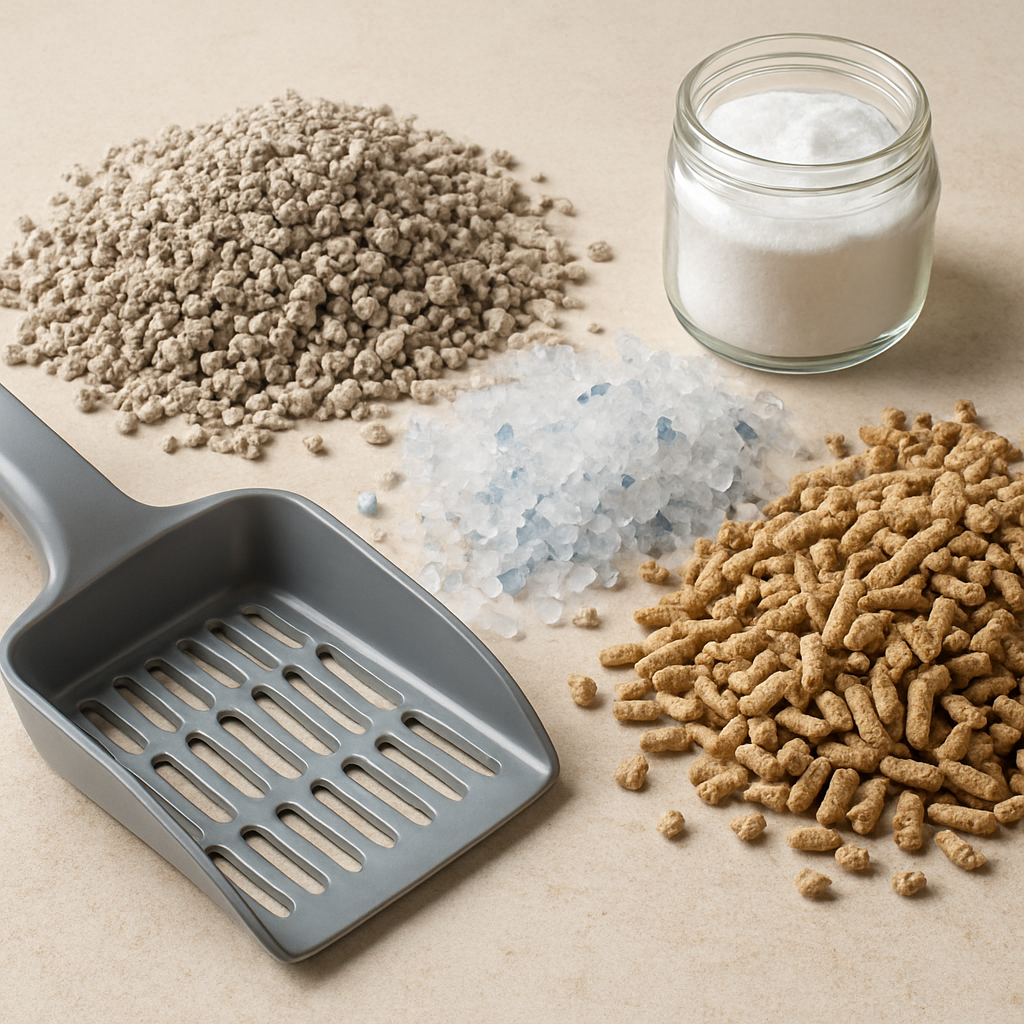
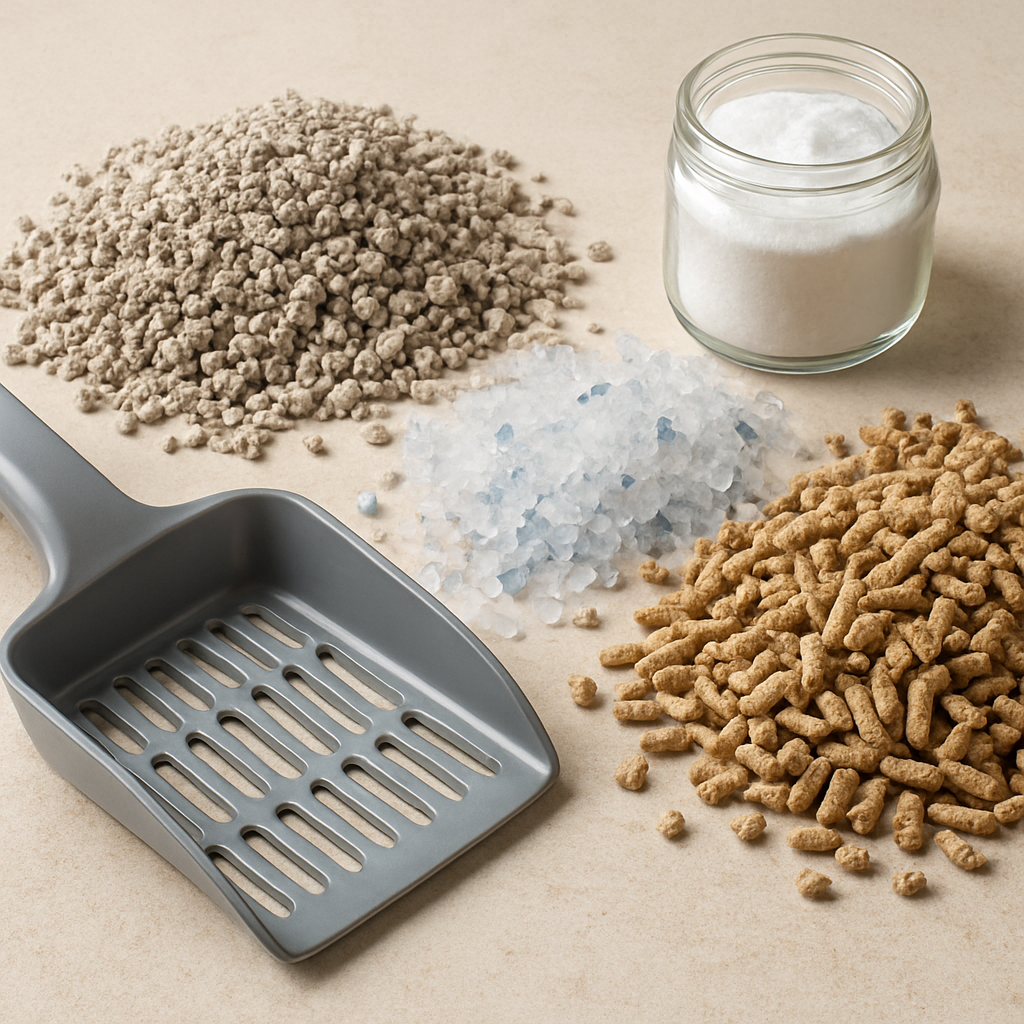
Clumping clay and silica/crystal litters physically lock moisture and waste into tight clumps or beads, which gives you better short-term odor control between scoops.
Plant-based litters (corn, wheat, walnut shell, recycled paper) can be great for composters and sensitive cats, but they usually need more frequent changes to stay fresh.
Kittens and senior cats often prefer finer, low-dust formulas because dust irritates lungs and eyes. If your cat gags at dust or paws at the box, switch to a low-dust option.
Got multiple cats or a small apartment? High-absorption litters and more frequent scooping help. In tight spaces, silica litters often hold odor longer between changes.
Does scent matter to you? Be careful: heavily fragranced litters can stress some cats. Unscented but effective odor-neutralizing litters are usually the kinder choice.
Don’t trust a label. Buy small bags and trial them. Put your current litter in one box and the test litter in another, scoop identically, then check after 24, 48, and 72 hours.
If the new litter smells fresher at 48 hours, it’s a keeper. If not, try another type or mix small amounts to find a balance.
Need help picking a system that pairs well with higher-performing litters? Our guide on How to Choose and Maintain a Cat Litter Box Self Cleaning System explains what litter textures and clumping properties work best with self-cleaning units.
So, what should you try this week?
Tip: sprinkle a light dusting of baking soda under the litter — not mixed in — to help neutralize odor at the base. A thin layer is enough; too much affects clumping.
Another quick win is pairing a high-absorption litter with a tight-fitting lid or a covered box in rooms that need odor control, but make sure your cat tolerates enclosed spaces first.
Think about switching if you notice these signs: lingering ammonia smell within 24–48 hours after scooping, visible dampness that won’t clump, or your cat avoiding the box.
Ready for a short experiment? Pick one new litter type, run the two-box smell test for three days, and stick with the winner for a full month. Habit + the right litter = big improvements in cat litter box odor control.
If you spot improvements, great—keep that schedule. If not, repeat with another litter type or tweak scoop frequency.
In our experience serving cat lovers and pet parents, small experiments like this are the fastest route to a fresher home. You don’t need to overhaul everything at once — swap one box, test, and adjust. That’s how you win.
We get it—walking past the litter box shouldn’t feel like stepping into a cloud of mystery smell. The good news is that where you put the box and how you let fresh air move around it can shave off most of the odor you’re fighting.
First, think like a cat but also like a roommate who hates stale air. Cats love a quiet corner, but a corner that traps smells is a nightmare for both of you. Aim for a low‑traffic spot on a hard‑floor surface—think bathroom tile, laundry room mat, or a hallway corner.
Why hard surfaces? They’re easy to wipe down, they don’t hold onto dust, and they let any accidental spills evaporate faster. If you live in an apartment with carpet, lay a thin, washable mat right in front of the box. The mat catches stray litter and gives the floor a quick‑dry zone.
Next up: ventilation. A box with a built‑in vent or a simple open‑top design lets odor‑laden air escape instead of hanging around. If you have a covered box, pop the lid a crack when you’re home so fresh air can circulate. Even a small desk fan pointed at the box for a few minutes after scooping can make a noticeable difference.
So, where’s the sweet spot? A bathroom vent is a cat‑friendly gold mine. The fan pulls humid air out, and the slight draft carries any lingering scent toward the exhaust. If a bathroom isn’t an option, a laundry room with a ceiling vent works just as well. Keep the box at least a foot away from the vent inlet so the airflow doesn’t blow litter everywhere.
Multi‑cat households need a little extra breathing room. The rule of thumb is one box per cat plus one extra, each placed in its own micro‑zone. That means you shouldn’t stack two boxes side‑by‑side in a cramped closet. Spread them out on different floors or opposite ends of a hallway so each cat gets its own fresh‑air corridor.
A quick visual checklist can keep you on track:
If you’re still not sure whether a spot is right, try the “sniff test.” Close your eyes, walk past the box, and see if you notice any lingering odor within a few steps. If the smell fades quickly, you’ve likely found a well‑ventilated location. If it lingers, move the box a few feet away from the wall or add a small fan.
A final pro tip: combine placement with a little natural deodorizer. Sprinkling a pinch of baking soda (the same stuff you find in the ARM & HAMMER guide on litter box setup) on the bottom of the litter before adding fresh litter creates a silent odor‑absorbing layer. The result is a fresher box that stays that way longer, especially when the airflow is doing its job.
Even the best clumping litter can’t lock every ammonia molecule the way a cat’s digestive system does. That’s why a little extra help—an odor‑absorbing additive—can turn a “just okay” box into a genuinely fresh‑smelling space.
Think of it like adding a charcoal filter to your kitchen vent; the litter does the heavy lifting, and the additive catches the stray smells that escape.
If you’re looking for something that works with any litter type, the Sprinkle & Sweep Litter Box Deodorizer is a solid pick. It boasts coconut‑activated carbon, which neutralizes odor at the molecular level instead of just masking it.
Another fan favorite is the Rocco & Roxie Litter Box Odor Eliminator. Its corn‑cob granules soak up moisture, and a blend of essential oils actually neutralizes the smell, not just covers it.
Both products are non‑toxic, biodegradable, and safe for kittens—perfect for households with curious little explorers.
Start with a clean box. Dump out any old litter, give the tray a quick wipe with mild soap, and let it dry. A clean surface lets the additive work its magic.
Next, sprinkle a thin, even layer of your chosen deodorizer over the bottom of the box—about a tablespoon for a standard size tray. If you’re using a powder, lightly dust it before adding fresh litter. If it’s granules, mix them directly into the litter after you pour the fresh bag in.
When you scoop, treat it like a mini‑maintenance ritual: after each scoop, shake a few more granules over the fresh spot. That keeps the odor‑absorbing barrier continuous, even as the litter gets disturbed.
1. Layer it. A pinch of baking soda under the additive creates a double‑action shield—baking soda tackles acidic compounds, while the carbon or corn‑cob tackles ammonia.
2. Don’t overdo it. Too much powder can clump the litter and make scooping harder. A light dusting is enough; you’ll notice the difference after the first day.
3. Refresh regularly. Most manufacturers say a bag lasts a month for one‑to‑two cats. Set a calendar reminder to sprinkle a fresh dose every 2‑3 weeks, or whenever you notice a faint whiff.
4. Combine with ventilation. Even the best deodorizer can’t fight a sealed box. Keep the lid slightly ajar when you’re home, or place a small fan nearby for a few minutes after each scoop.
5. Test before you commit. Try a half‑spoon in a corner of the box for a day. If the scent stays down, you’ve found the right amount; if it feels dusty, scale back.
Now you’ve got the litter, the placement, and the additive covered. The final checklist looks like this:
Follow these steps and you’ll notice the “cat‑box smell” fading faster than you can say “who’s up for a cuddle?” Your home stays fresh, your cat stays happy, and you finally get to enjoy a room without that lingering odor.
Ever glance at the litter box and think, “If only I could set a timer and forget about the smell?” Yeah, we’ve all been there. The truth is, cat litter box odor control isn’t magic—it’s consistency. A solid cleaning cadence keeps ammonia from building up, and it gives your cat a fresh spot to do its business every day.
So, what should a realistic schedule look like for a busy pet parent? Let’s break it down into bite‑size actions you can actually stick to.
When you scoop once a day, you’re removing the bulk of waste, but tiny particles still linger in the litter. Those particles feed bacteria, and bacteria produce the pungent ammonia we all dread. A routine that combines quick daily scoops with deeper weekly refreshes stops that cycle in its tracks. In the cleaning routine guide, the author notes that a twice‑daily scoop and a weekly full‑box wash yields the most noticeable drop in odor.
Here’s a no‑nonsense timetable you can paste on the fridge. Adjust the times to match when you feed your cats, because that’s when they usually head to the box.
That’s it—four simple actions that fit into most schedules without feeling like a chore.
Set a phone alarm for the morning and evening scoops. Pair the alarm with a habit cue, like “grab the coffee” or “check the mail.” The brain loves that kind of pairing, and soon the scoop becomes as automatic as brushing your teeth.
If you’re the type who forgets even with reminders, keep a small checklist on the back of the litter box lid. A quick glance and you’re good to go.
Another pro tip: keep a dedicated cleaning kit nearby—a small bucket, a scrub brush, and a bottle of pet‑safe disinfectant. When everything’s within arm’s reach, the extra steps feel less like a mountain and more like a quick pit stop.
| Frequency | Task | Key Notes |
|---|---|---|
| Twice daily | Scoop clumps & solid waste | Do it right after meals for consistency |
| Weekly | Empty, wash, and refill box | Use mild soap, rinse well, dry fully before refilling |
| Bi‑weekly | Refresh deodorizer layer | Sprinkle a thin layer of baking soda or commercial deodorizer |
Stick to this rhythm for a couple of weeks and you’ll notice the “cat‑box smell” fading fast. Your home stays fresher, your cats stay happy, and you finally get to breathe without holding your nose.
Remember, cat litter box odor control is less about one‑off hacks and more about the steady, reliable routine you build. Give yourself a pat on the back for every day you stick to the schedule—small wins add up to a big, odor‑free victory.
So far we’ve tackled litter choice, placement, additives, and a cleaning rhythm. If you’ve tried all that and still catch a whiff of ammonia, it’s time to bring in some tech‑savvy helpers.
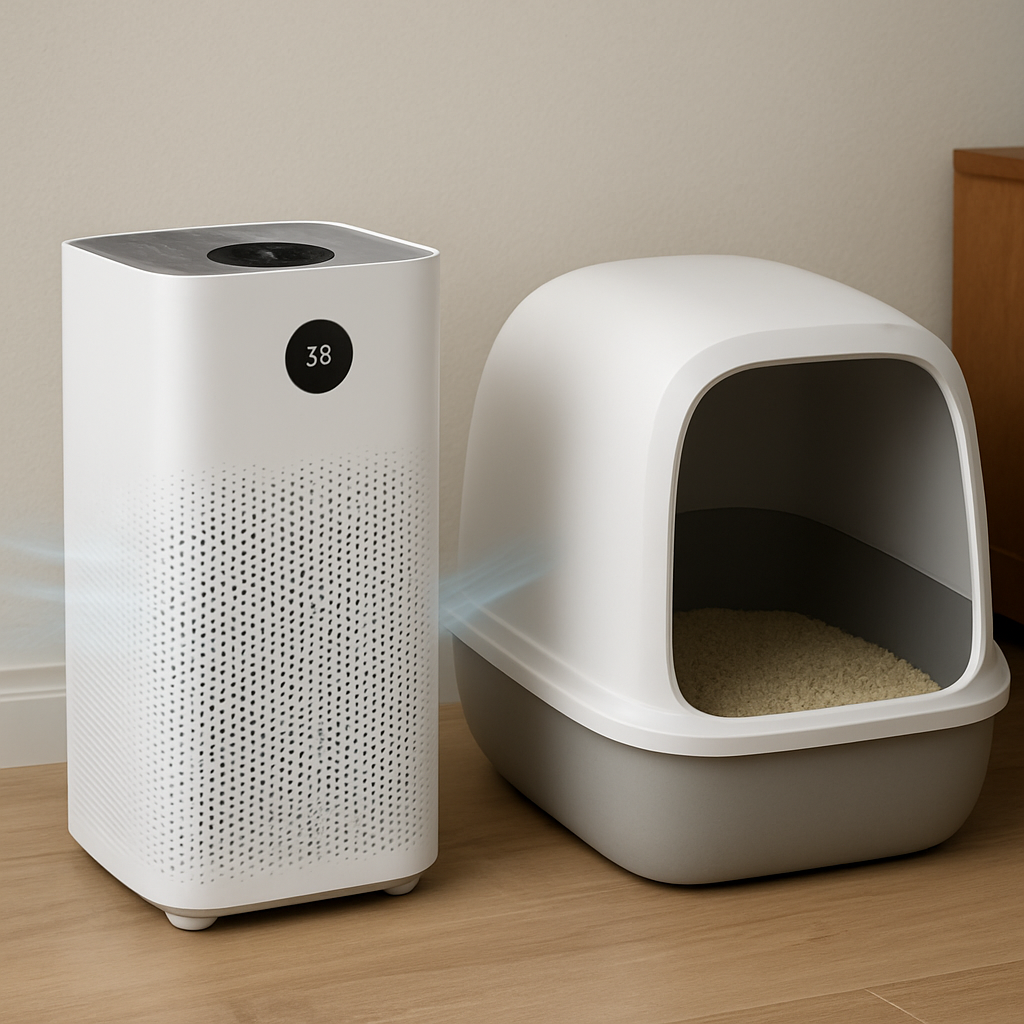
Think of an air purifier as a silent roommate that constantly sucks up the invisible gases your cat’s litter box releases. The secret sauce is an activated‑carbon filter – it adsorbs volatile organic compounds (VOCs) like ammonia, locking them in the carbon pores instead of letting them drift through your living room.
A recent test series from HouseFresh showed that models with at least 400 g of pelleted carbon can cut litter‑box odor by up to 70 % in a 300‑sq‑ft room. The reviewer also notes that five air changes per hour is the sweet spot for keeping the smell at bay.
First, measure the square footage of the room where your box lives. If you have a single cat and a 5‑gal box, a compact unit like the Levoit Core 300S (with a Smoke Remover carbon filter) will usually do the trick. Multi‑cat households, however, need something beefier – the Austin Air HealthMate, with 15 lb of carbon, was highlighted as the top pick for heavy odor loads.
Place the purifier as close to the box as possible, ideally a foot or two away, and point the intake toward the litter. That way the device catches the freshest odor before it has a chance to mingle with the rest of your air.
Covering the box can help contain odors, but only if the enclosure still lets air flow. A simple DIY solution is a sturdy plastic storage bin with a cut‑out lid that snaps shut. Line the interior with a thin layer of baking soda before adding litter – the soda acts as a secondary odor trap.
Be careful not to create a sealed chamber. Cats need to see all directions when they’re doing their business, and a completely airtight box can stress them out and even lead to accidents outside the tray. The Newtown Square Veterinary Hospital warns that covered boxes often discourage cats because they feel trapped and can amplify smells inside.
If you opt for a covered box, choose one with ventilation slots or drill a few small holes near the top. A ½‑inch hole per 10 sq in of surface area is usually enough to let fresh air in without letting litter spill out.
Pro tip: If you have multiple litter boxes, consider a small purifier in each room rather than one giant unit. The energy draw stays low, and each cat gets its own “fresh‑air zone.”
Finally, remember that technology is a supplement, not a replacement, for good habits. Keep scooping twice daily, refresh your carbon filter, and give your cat a clean, well‑ventilated box. When those three pillars click together, you’ll finally be able to walk past the litter area without holding your breath.
We’ve walked through everything from picking the right litter to giving your box a breath of fresh air with a purifier. By now you probably feel like you have a toolbox full of simple, science‑backed tricks.
So, what’s the easiest place to start? Grab a tablespoon of baking soda, sprinkle it at the bottom, and set a reminder to swap the carbon filter every few months. Those two tiny habits alone can shave most of the odor right off the radar.
Next, think about routine. A quick scoop after each meal, a weekly wash, and a monthly filter change create a rhythm that even the busiest pet parent can keep up with. When the schedule clicks, you’ll notice the air around the box staying cleaner, and you won’t have to hold your breath any longer.
And remember, technology is a sidekick, not a replacement. An air purifier or an enclosed box works best when the basics—clean litter, proper placement, and consistent maintenance—are already in place.
Finally, picture this: you walk past the litter area, take a deep breath, and the only scent you get is a faint hint of fresh laundry. That’s the result of a few minutes of effort each day. Ready to make that a reality?
Ideally, you want to scoop at least twice a day – once after breakfast and once after dinner. Those are the times your cat is most likely to use the box, so removing clumps right away stops bacteria from breaking down waste into ammonia. If you’re juggling a busy schedule, set a phone reminder or pair the scoop with another routine, like checking the mail. Even a quick 30‑second scoop each time can keep the smell from building up.
Absolutely. A thin layer of baking soda under the litter acts like a silent deodorizer without being abrasive. Just a tablespoon spread across the bottom is enough; it won’t get into your cat’s paws the way heavy powders do. The key is to keep it light – too much can make the litter gritty and discourage digging. Most cats don’t even notice it, but you’ll notice the fresher air.
No, they’re a supplement, not a substitute. Additives such as carbon‑based deodorizers or natural corn‑cob granules can mop up lingering smells between washes, but they don’t remove the waste itself. Think of them as a “fresh‑air filter” for the litter. You still need a daily scoop and a weekly full‑box wash to get rid of the bacteria that cause odor in the first place.
Covered boxes can trap smells inside, which sounds good on paper, but they also limit airflow. If you go the covered route, make sure the lid has ventilation slots or a small hole so fresh air can circulate. Without that, the box can become a stinky, stressful environment for your cat, and they might start doing their business elsewhere. Pair a covered box with a thin soda layer and a daily scoop, and you’ll get the best of both worlds.
Look for a unit with an activated‑carbon filter – that’s the part that actually grabs ammonia molecules. Size matters too: a purifier rated for the square footage of the room (or a bit larger) will change the air enough to keep odors down. Place it a foot or two from the box and run it on medium or high for the first week; then you can dial it down once the air stays consistently fresh.
Put the box on a hard floor like tile, laminate, or a washable mat – that way any accidental spills dry quickly and don’t hold onto odor. Aim for a low‑traffic spot with a nearby vent or a small fan pointing toward the box. A bathroom or laundry room works well because the existing ventilation helps whisk the smell away. Keep the box at least three feet from food and water dishes, too.
Yes. Choose a low‑dust, clumping litter and pair it with a dust‑free deodorizer like a carbon‑based powder. Sprinkle just enough to cover the bottom, then add the litter. The carbon captures odor without adding particles that could irritate your cat’s lungs. A quick daily scoop and a weekly wash will keep both dust and smell at bay, giving you a cleaner home and a happier, healthier cat.







Leave a comment